Hot rays of the sun
Heated rock warming water
Vast sources of force
[ americanifesto / 場黑麥 / jpr / urbanartopia / whorphan ]

americanifesto.com | updated Tuesday, Thursday, Sunday
Showing posts with label renewable. Show all posts
Showing posts with label renewable. Show all posts
11 March 2018


08 November 2017
solar farm built
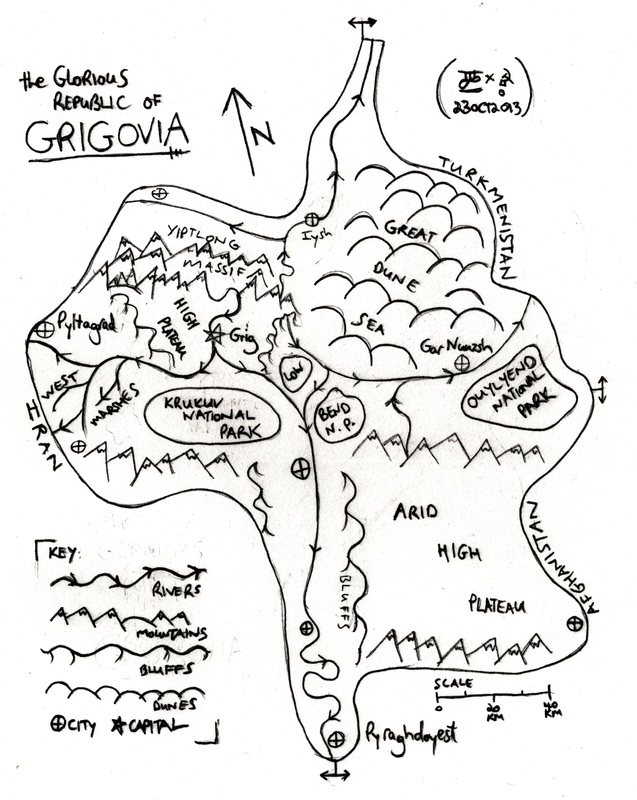
Ground was broken today on the second of three solar farms planned to be built this decade in the Great Dune Sea north-west of the city of Gar Nuuzsh, in eastern Grigovia. Solar energy will be used to heat salt to roughly 300 degrees Celsius. Then, the molten salt - a mixture of nitrates calcium, potassium, and sodium - will flow through insulated underground pipes into concrete storage tanks situated throughout Gar Nuuzsh.
Once all three farms are operational, nearly half of the city’s 100,000 residents will be able to draw both electricity and heat from the storage tanks. Unassuming silos that resemble conventional oil storage tanks, the heat sinks will be topped with viewing platforms and surrounded by community gardens. External sections of each sink will be set aside for graffiti and the application of other spontaneously-occurring works of public art.
By 2030, Gar Nuuzsh plans to cover all of its electrical and heating needs from six such solar farms. Additionally, parabolic dish Stirling solar energy conversion systems installed on rooftops around the city will feed heat into the sinks and electricity into the local power grid. Cities in more mountainous western Grigovia generate a good portion of their electricity using wind and geothermal deposits.
americanifesto / 場黑麥 / jpr / urbanartopia / whorphan
Once all three farms are operational, nearly half of the city’s 100,000 residents will be able to draw both electricity and heat from the storage tanks. Unassuming silos that resemble conventional oil storage tanks, the heat sinks will be topped with viewing platforms and surrounded by community gardens. External sections of each sink will be set aside for graffiti and the application of other spontaneously-occurring works of public art.
By 2030, Gar Nuuzsh plans to cover all of its electrical and heating needs from six such solar farms. Additionally, parabolic dish Stirling solar energy conversion systems installed on rooftops around the city will feed heat into the sinks and electricity into the local power grid. Cities in more mountainous western Grigovia generate a good portion of their electricity using wind and geothermal deposits.
americanifesto / 場黑麥 / jpr / urbanartopia / whorphan
09 September 2014
on Grigovian energy
Vast wind farms abound on the Great Barren Plain where few people live and thus fewer complain. They're built to high standards of technology, can capture such gusts as would barely move trees. Deep wells also tap into geo-therm heat (through cycles that are on an endless repeat) by pulling hot water from deep underground and using its steam to send turbines around. Solar collectors dot the Great Dune Sea, all gathering photons by day, silently, but these must be washed and always cleaned of dust lest they should develop a light-blocking crust. There's coal in our mountains, some wide seams of it, but we're not much into just burning the shit. We'd rather turn algae into diesel fuel or harness sources that are renewable. All things that make power are owned and belong to each native person born in the Yiptlong, or brought to life within our national borders – to all of Grigovia's fine sons and daughters. We've set up a true non-profit corporation to make sure that all electricity won gets doled out and shared without too much corruption lest there should flare up a vast social eruption. GriSol is its shortened, legitimate name, to honor the source whence all life truly came, invest in our future and make our land great, together we can all mankind elevate.
© americanifesto / 場黑麥
© americanifesto / 場黑麥
24 October 2013
biodiesel program initiated
Citing concerns about the long-term feasibility, fundamental morality, and ongoing reliability of shipments of oil from Saudi Arabia and natural gas from Russia, the Glorious Republic of Grigovia began the process of shifting its motor-pools to biodiesel. “For too long we have ignored a fuel source that is renewable and that we grow here at home, preferring instead products sold by authoritarian regimes,” said Dr. Frederikka Velldoyend, Grigovia's prime minister. “With help from foreign and local experts and funded by sizable investment in the research and development of biodiesel technologies at our major universities, we expect Banoyend to have thrown off the yoke of foreign petrochemical by beginning of next decade.” One major stipulation of the Mandate for Energy Independence, or MAENIN, is that a majority of the plant material used to make Grigovian biodiesel come not from dedicated biomass but rather from waste such as rotten or spoiled or insect-ravaged crops, tree trimmings, construction and industrial wood-tailings, fallen leaves, and residential grass clippings. “Our preliminary research shows that the local timber and construction industries alone produce enough leftover wood scraps to provide biodiesel for half of Grigovia's government motor pool,” said Ryain Uloyenst-Hong, an American-Grigovian professor of applied sciences on sabbatical from the Massachusetts Institute of Technology (MIT). “Once we prove its feasibility and economy by converting our military and government vehicles to run on this native-grown fuel source, we plan to make it available across Grigovia,” said Theorovask Iyend, public liaison for the country's Interior Ministry. “In just a few years, at major fueling stations from Pyltagrad to Gar Nuuzsh, from Pryaghdoyest to Iysh, the Grigovian will be able to recharge or refill her vehicle with renewable electricity from solar and wind, imported gasoline, or local biodiesel. Huzzah.” Persons interested in brewing their own biodiesel should visit the Interior Ministry's website, where they will find detailed blueprints for building a biodiesel distillery, safety guidelines, and links to public funding sources. MAENIN is the newest phase in Grigovia's efforts to ween itself off fossil and non-renewable fuels. Over the past two years it has increased its energy production from geothermal and wind sources to cover 30% of national demand.
© americanifesto / 場黑麥
© americanifesto / 場黑麥
Subscribe to:
Posts (Atom)